

Key Takeaways
1. Winter garage door noise usually shows up when cold weather makes metal parts contract, old grease stiffen, and friction increases across the system.
2. Most noisy garage door complaints trace back to the same most common causes: dry rollers, worn rollers, loose hinges, and shifting tracks, especially after temperatures drop and the door cycles under load.
3. Anchor Doors & Service can restore quieter, safer performance with targeted repairs and a true diagnostic approach, from tightening loose bolts to correcting track alignment, so the garage door runs reliably again.
Garage Door Noise Winter Causes and What They Mean
If your garage door sounds change after winter, it is usually not random. When cold temperatures arrive and temperatures drop, the metal in the garage door and the opener components can tighten slightly.
At the same time, the lubricant that worked fine in warmer months can thicken, turning normal movement into drag.
The goal is to match the sounds you hear to what is happening inside the garage door system, so you can spot the issue early and choose a simple fix when one is available.
1. Grinding – The Door Is Dragging Instead of Rolling
Grinding is a gritty, rough noise as the door travels, usually in the horizontal tracks or at the curve where the door turns overhead. In winter, metal rollers and bearings can stiffen, and existing wear becomes louder.
If you already have worn rollers, cold weather can make them feel rougher, increasing friction-based noise and making the door sound like it is scraping.
Grinding can also show up when track alignment is slightly off. Even a small adjustment to the track and hardware can be the difference between a door that glides and one that grinds.
2. Squeaking – Dry Friction Showing Up Under Cold Stress
A sharp squeak is often a sign of dry contact points. As cold temperatures set in, lubrication can thin out in some spots and thicken in others, especially if there is old grease buildup. That is when you start hearing squeaks from hinges, roller stems, and other moving parts.
Moisture and road salt can also accelerate surface wear on metal parts, so squeaks often get louder during winter, when moisture and grit are present.
3. Popping – A Tension System Reacting to Load
A sudden popping sound often points to the spring system. Springs carry the lifting load, and winter can make an already stressed spring feel harsher. If the sound is coming from the spring area, it can be linked to spring tension shifting during travel.
On some doors, it can also signal the door binding in the track and then releasing. If the popping is loud, sharp, and new, do not ignore the possibility of a broken spring. Doors with torsion springs or tension springs can become unsafe quickly when a spring fails.
4. Banging – Movement That’s No Longer Controlled
A loud thud, slam, or bang usually means something is moving out of place. Winter increases vibration because the door doesn’t glide as easily, so loose hardware starts making itself known. Banging usually points to loose bolts, loose brackets, or a track shift that causes the door to strike where it should slide.
It can also show up when the door does not close properly or is no longer properly balanced, which puts extra strain on the opener and the rest of the system.
5. Rattling – Hardware Loosening + Vibration Getting Worse
A rattle is often the sound of many small things adding up. When the door runs rougher in winter, any slightly loose hinge screws, track fasteners, or roller brackets can chatter. You might hear it most clearly mid-travel, when the motor and door are under steady load.
6. Thumping – Door Sections, Flexing or a Flat Spot in Rollers
A soft, repeating bump during travel often comes from rollers. Over time, nylon rollers can develop wear patterns, and winter stiffness makes that wear more noticeable.
You may also notice light thumping where door sections flex through the curve, especially when the door is loud or slightly rough in motion.
7. Screeching – Wrong Lubricant or Dry Metal Sliding Under Load
A sharp screech can happen when the wrong spray is used. Some products thicken in winter, turning movement into drag. If the door got noisier after you recently applied something, it may be the lubricant, not the door itself. Proper lubrication should reduce noise, not amplify it.
The Most Common Fixes That Quiet a Garage Door After Winter
Cold air stiffens materials, and tiny alignment issues start speaking up as squeaks, rattles, and grinding. The good news is that most of these noises trace back to a few fixable areas.
Tightening and Stabilizing Hardware Where Appropriate
Cold weather has a way of exposing loose spots you didn’t notice in the fall. Hinges, brackets, and track fasteners can slowly back off over time, and winter vibration makes the door sound sharper every cycle.
Roller Replacement or Upgrades
Rollers are one of the biggest contributors to winter noise because they carry the door’s weight through the track. When rollers wear down, the door starts to sound rough, especially at the curve where it transitions overhead. You might also notice a more dragging feel, even if the opener still pulls it through.
Track Alignment and Balance Check
Winter can highlight alignment issues that were already developing. Even a small shift can make the door scrape, rub, or sound like it’s fighting its own path. Balance matters too; an imbalanced door forces the opener to work harder, which can sound like strain, groaning, or uneven travel.
Lubrication Done Correctly, Right Product, Right Points
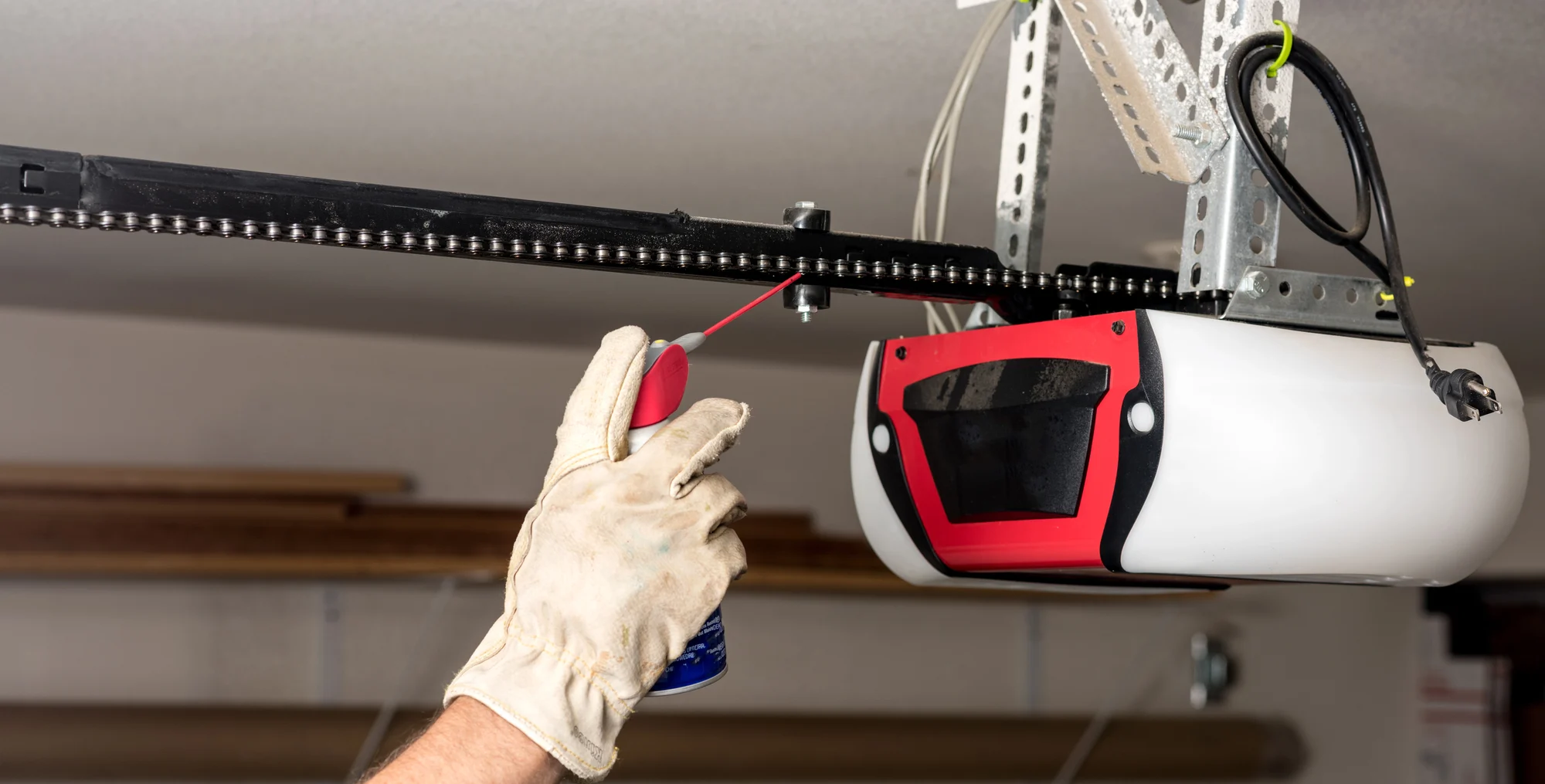
Some products gum up in low temperatures, while others don’t hold long enough to reduce friction. Good lubrication is less about soaking everything and more about treating the right contact points so the door stops squeaking without attracting grime.
Weather Seal Replacement to Reduce Vibration and Air Leaks
Worn weather seals aren’t only a draft problem. When seals flatten or pull away, the door can rattle slightly as it closes because it’s no longer landing into a firm, cushioned seat. That extra movement shows up as tapping, vibration, or a loose-sounding finish at the bottom and corners.
Why Garage Doors Get Louder at the First Warm-Up After Winter
Garage doors often get louder during the first warm-up after winter because the system is adjusting after weeks of cold, stiff operation. As temperatures rise, metal parts expand slightly and the door’s clearances change, which can create new rubbing points in the tracks or at the curve where the door transitions overhead.
At the same time, winter leaves behind grit and dried residue. When that debris shifts during the first few cycles of warmer weather, it can sound like scraping, grinding, or rattling, even if the door worked fine all winter.
The other common reason is lubrication. Cold weather can thicken lubricant and hide certain wear patterns, but when things warm up, old product can turn gummy or unevenly spread across moving parts.
That creates friction in places you do not usually notice, such as roller bearings and hinges, and the noise becomes immediately apparent as the door cycles faster and with less resistance. If the sound is new, persistent, or getting worse over a few days, it is worth treating it as an early sign of wear or alignment drift rather than assuming it will settle on its own.
How Often Should a Garage Door Be Tuned Up in Cold Climates?
In cold climates, a garage door usually benefits from a tune-up at least once a year, and many homeowners find a twice-a-year rhythm works better when winters are long, icy, or windy.
Cold weather changes how the system behaves. Lubricant thickens, metal contracts, and small alignment or balance issues that were quiet in warmer months tend to show up as noise, hesitation, or uneven travel.
A tune-up helps reset the system so the door operates smoothly, rather than fighting friction every time temperatures drop.
Get Your Garage Door Back to Quiet After Winter
Garage door noise after winter is usually your door’s way of telling you something is slightly off. Fixing it early keeps the door running smoother, prevents avoidable wear, and helps you avoid a surprise breakdown when you need the door most.
Your next 3 steps should be:
- Do a quick check today. Listen for the source of the noise (rollers, tracks, hinges, or opener) and look for obvious looseness, rubbing, or gaps.
- Stop forcing the door if it sounds rough. Avoid repeated cycling and schedule a tune-up before minor wear becomes a bigger repair.
- Call Anchor Doors & Service for a professional inspection and repair. Our team can tighten and stabilize hardware, replace rollers, correct track alignment, and restore smooth operation, plus 24-hour emergency service when it can’t wait.
Request service with Anchor Doors & Service to quiet your door, protect the system, and get it running reliably again.