

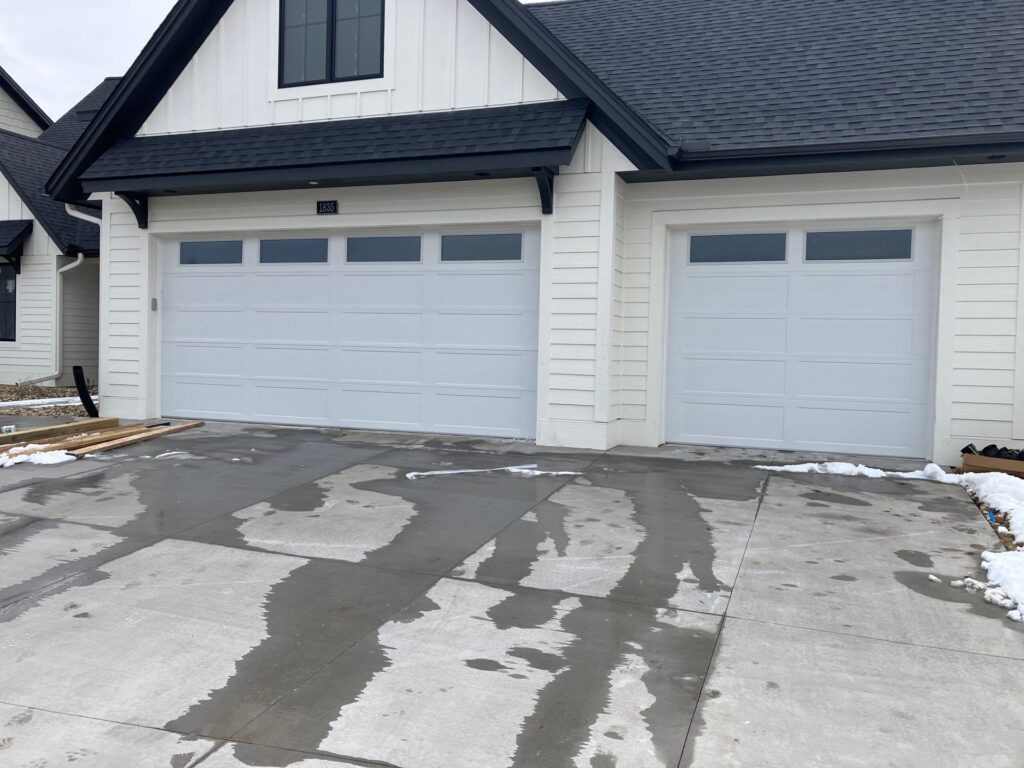
Key Takeaways
1. Garage door weatherproofing should address seals, drainage, alignment, panels, hardware, and the surrounding frame, not insulation alone.
2. Homeowners can perform visual checks and basic cleaning, but springs, cables, tracks, reinforcement, and structural repairs require professional attention.
3. Anchor Doors provides residential and commercial inspections, repairs, replacement, warranties, and 24-hour emergency service across southwestern Ontario.
What Is Garage Door Weatherproofing?
Garage door weatherproofing is the process of sealing gaps, repairing worn components, controlling moisture, and preparing the complete door system for local weather conditions. Done properly, it can help reduce drafts, water intrusion, energy loss, premature wear, and storm-related damage.
This is especially important in southwestern Ontario, where garage doors regularly face heavy rain, strong winds, snow, ice, and sudden temperature changes. Repeated freeze-thaw cycles can harden weatherstripping, loosen connections, and allow moisture to collect around the threshold. Wind-driven debris may also dent panels or damage hardware.
A proper assessment should cover:
- Bottom and perimeter seals
- Door panels
- Tracks and rollers
- Hinges, brackets, and fasteners
- The surrounding frame
- Threshold and floor condition
- Grading and drainage
- Opener performance
The goal is to make sure every part works together to keep the opening secure, dry, and dependable year-round.
Garage Door Storm Preparation Checklist
Storm preparation is easier when each task has a clear purpose. Work through these checks before the wind and rain arrive, while conditions are still safe.
Start With What You Can See
Walk around the door and look for cracked hinges, loose brackets, bent tracks, rusted hardware, or panels that are dented or beginning to separate. Check the weatherstripping along the top, sides, and bottom. If it is brittle, torn, flattened, or pulling away from the frame, it may no longer keep out wind and rain effectively.
Do not overlook the ground outside. If water regularly pools against the door, replacing the bottom seal may only hide the larger problem. From our experience, homeowners often point out that garage door seals are not completely watertight.
Watch and Listen as the Door Moves
Open and close the door once while paying attention. Does it shake, scrape, hesitate, or close unevenly? Test the photo-eyes and automatic reversal system, and make sure the door reaches the floor without leaving obvious gaps.
We also caution against pushing the door too tightly against the frame just to improve the seal. Too much pressure can make the door bind, especially when wooden framing swells.
Close and Secure the Garage Door Early
Close the door before the winds intensify and make sure it reaches the floor completely. A partially open door creates a larger opening for wind and rain and may place additional pressure on the panels and tracks.
Replace Damaged Weatherstripping
Inspect the seals along the bottom, top, and sides. Replace weatherstripping that is cracked, brittle, torn, flattened, or pulling away from the frame. The seal should make consistent contact without forcing the door to bind.
Check Drains, Grading, and Downspouts
Make sure nearby drains are clear, and downspouts direct water away from the garage. Users dealing with repeated garage flooding often find that a new seal does not solve water pooling against the door. A threshold may help with minor runoff, but poor grading or drainage still needs attention.
Bring Loose Outdoor Items Inside
Move furniture, garbage bins, tools, planters, toys, and other loose objects into a secure location. Strong winds can push these items into the garage door, damaging panels, windows, tracks, or surrounding property.
Park Vehicles Inside When Possible
If conditions permit, place vehicles inside before the storm begins. This protects them from hail, falling branches, and wind-driven debris. Leave enough clearance for the garage door to close fully without touching the vehicle.
Learn How to Use the Manual Release
Review the manufacturer’s instructions before a power outage occurs. The release should generally be used only when the door is fully closed and stable.
For example, a homeowner discovered during a storm that the release cord did not work as expected, leaving them unable to operate the door when the power failed. Testing your understanding beforehand can prevent the same surprise.
Protect the Opener From Power Surges
Unplug sensitive equipment when severe electrical activity is expected, and it is safe to do so. Consider compatible surge protection if outages and power fluctuations are common.
Garage-door technicians note that transformers and control boards can fail after power interruptions. Some homeowners have also found that their openers need to be unplugged and reset after a flicker.
Never Repair the Door During Severe Weather
Once the storm begins, stay inside and away from an unstable garage door. Do not adjust tracks, springs, cables, panels, or reinforcement while the door is under wind pressure. Wait until conditions are safe and contact a qualified technician if damage has occurred.
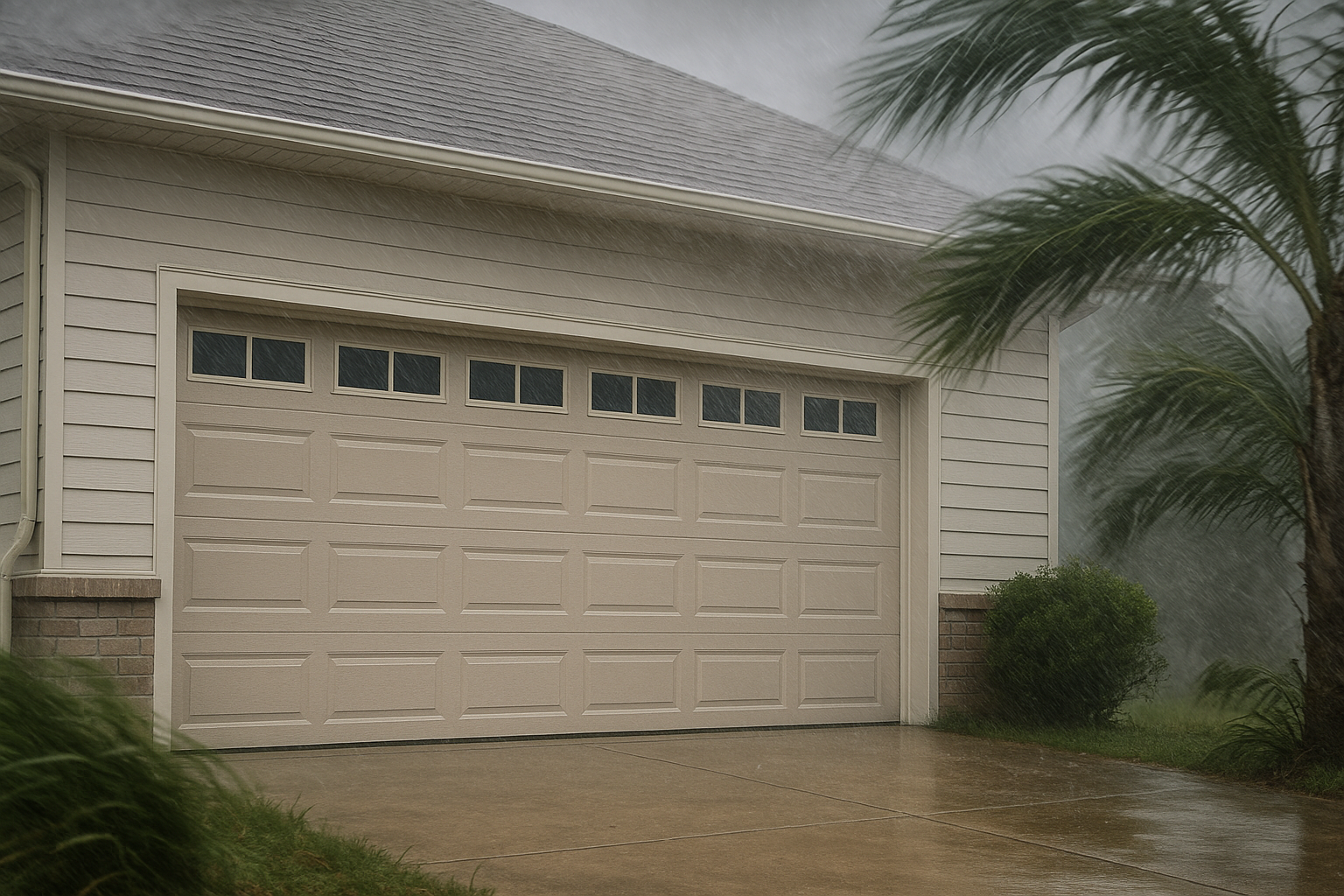
Why Investing in a Storm Garage Door Matters During Hurricane Season
Key Garage Door Weatherproofing Upgrades
The best weatherproofing upgrade depends on where air or water is entering and whether the door still closes correctly. Anchor Doors can inspect the complete opening and recommend targeted repairs instead of adding seals that may hide a larger alignment, drainage, or structural problem.
Replace the Bottom Seal
The bottom seal compresses against the floor to close minor gaps beneath the door. Replace it when the material becomes brittle, torn, flattened, loose, or unable to maintain consistent contact.
Anchor Doors can match the replacement seal to the door and inspect the retainer for corrosion or damage. If the door closes unevenly, the technician can determine whether the problem comes from the seal, floor, tracks, or door balance.
Add a Threshold Seal
A threshold seal attaches to the garage floor and works with the bottom seal to create another barrier against drafts, debris, and minor wind-driven rain. It can be useful when the concrete has small irregularities.
Seal Appropriate Frame Gaps
Exterior-grade sealant can close suitable stationary joints between the garage door frame and exterior wall. It should never block drainage paths or interfere with tracks, rollers, seals, or other moving parts.
Gaps caused by structural movement or misalignment require proper diagnosis rather than another layer of caulk. Homeowners and businesses can contact Anchor Doors & Service Inc. for weatherproofing repairs, replacement options, and professional garage door service.
Common Garage Door Weak Points That Let Weather In
Weather does not always enter through one obvious gap. Water and drafts often find their way inside through a combination of worn seals, misalignment, panel damage, and poor drainage.
- Worn Bottom Seals. Bottom seals gradually crack, flatten, and lose flexibility. Once permanently compressed, they may leave gaps where rain, snow, debris, and pests can enter.
- Damaged Top and Side Seals. Perimeter weatherstripping can harden, loosen, or pull away from the frame. Even a narrow opening may admit cold drafts and wind-driven precipitation.
- Uneven Garage Floors. Low spots and cracks in the concrete can allow water beneath an otherwise intact seal. A threshold may help with minor irregularities, but larger problems may require concrete or drainage work.
- Misaligned Tracks. Track alignment affects where the door rests when closed. If one side sits farther from the frame, replacing the weatherstripping alone will not create an even seal.
- Warped or Dented Panels. Damaged panels may no longer meet correctly at the section joints. They can also affect the door’s balance and place additional strain on the rollers, hinges, and opener.
DIY vs. Professional Garage Door Weatherproofing
Homeowners can handle basic cleaning and visual checks, but garage doors are heavy moving systems with springs and cables under considerable tension. Knowing where to stop is an important part of safe weatherproofing.
| Weatherproofing task | Suitable for DIY? | When to call a technician |
|---|---|---|
| Clean seals and tracks | Usually | When tracks are bent, loose, or misaligned |
| Inspect for gaps or corrosion | Yes | When the source of the gap is unclear |
| Clear the threshold and drains | Yes | When water continues pooling near the door |
| Replace a compatible bottom seal | Sometimes | When the retainer is rusted, bent, or damaged |
| Replace perimeter weatherstripping | Sometimes | When the door does not sit evenly against the frame |
| Apply exterior sealant to stationary joints | Sometimes | When moisture appears behind the frame |
| Adjust tracks or structural hardware | No | Always |
| Repair springs or cables | No | Always |
| Install reinforcement | No | A door-specific assessment is required |
| Replace damaged panels | No | Professional matching and installation are required |
| Replace the complete door | No | Professional measurement, removal, and installation are required |
Garage Door Weatherproofing Costs and Value
Garage door weatherproofing may cost anywhere from a modest DIY purchase to several thousand dollars for a complete insulated replacement. The right budget depends on what is letting weather in and whether the existing door is still structurally sound.
| Weatherproofing project | Typical Canadian planning cost |
|---|---|
| Replacement bottom-seal material | $20- $100+ |
| Floor-mounted threshold kit | $120-$200+ |
| Professional weatherstripping | $200-$600 |
| Minor hardware or alignment work | Custom quote |
| Structural reinforcement | Custom quote |
| New non-insulated steel door | $1,000-$1,800 installed |
| New insulated steel door | $1,500-$4,000 installed |
| Aluminum and glass door | $2,500-$7,000 installed |
The final quote also depends on:
- Residential or commercial use
- Door size and number of openings
- Seal and retainer condition
- Panel material and insulation
- Tracks, rollers, springs, and hardware
- Frame damage
- Structural reinforcement
- Opener compatibility
- Standard or emergency labor
- Repair versus replacement
When Weatherproofing Is Not Enough
Replacement may make more sense when several panels are cracked, warped, separating, or heavily corroded. It is also worth considering when the door repeatedly moves out of alignment, compatible parts are unavailable, or frequent repairs are beginning to cost more than they solve.
A new door may provide better value when the garage needs higher insulation, improved security, or a system better suited to local wind and weather exposure. For businesses, recurring failures can interrupt deliveries, expose equipment, and create avoidable downtime.
Anchor Doors can compare panel repair, hardware replacement, insulation upgrades, and full door replacement based on the condition of the complete system. Explore its residential garage door services or commercial door services.
Expert Perspective on Garage Door Storm Risk
The Insurance Institute for Business & Home Safety describes garage doors as “often the largest and most vulnerable opening in a home.”
During strong winds, a weak or damaged door may be forced inward. Once the opening is compromised, air can enter rapidly and increase pressure against the surrounding walls and roof. That is why storm preparation must involve more than replacing seals or adding insulation.
IBHS recommends regular service and appropriately wind-rated systems for exposed properties. Reinforcement should always be evaluated for the specific door, tracks, hardware, and building attachment.
Prepare Your Garage Door With Anchor Doors
Weatherproofing works best when the solution matches the door’s actual condition. A new seal may fix a straightforward gap, but it cannot correct warped panels, loose tracks, damaged hardware, or water flowing toward the garage.
Here’s what you should be doing next:
- Inspect the complete opening. Check the seals, panels, tracks, hardware, surrounding frame, threshold, and nearby drainage.
- Fix weaknesses before the weather worsens. Replace deteriorated seals and schedule service for corrosion, uneven movement, damaged panels, or loose components.
- Contact Anchor Doors. Arrange an assessment through its residential garage door services or call 1-888-487-4446 for scheduled or emergency assistance.